browse | for researchers
Sports science, made interactive.
Paper Playground turns cutting-edge sports science research into interactive mini-apps. Explore new ideas, see them in action, and test how they apply to you by connecting your SweatStack account.
How it works
- Pick — Each playground is specifically designed to explore a research paper
- Explore — Use sample data to explore the ideas in the paper
- Connect — Connect your SweatStack account to see how it applies to you
Playgrounds
#lactate
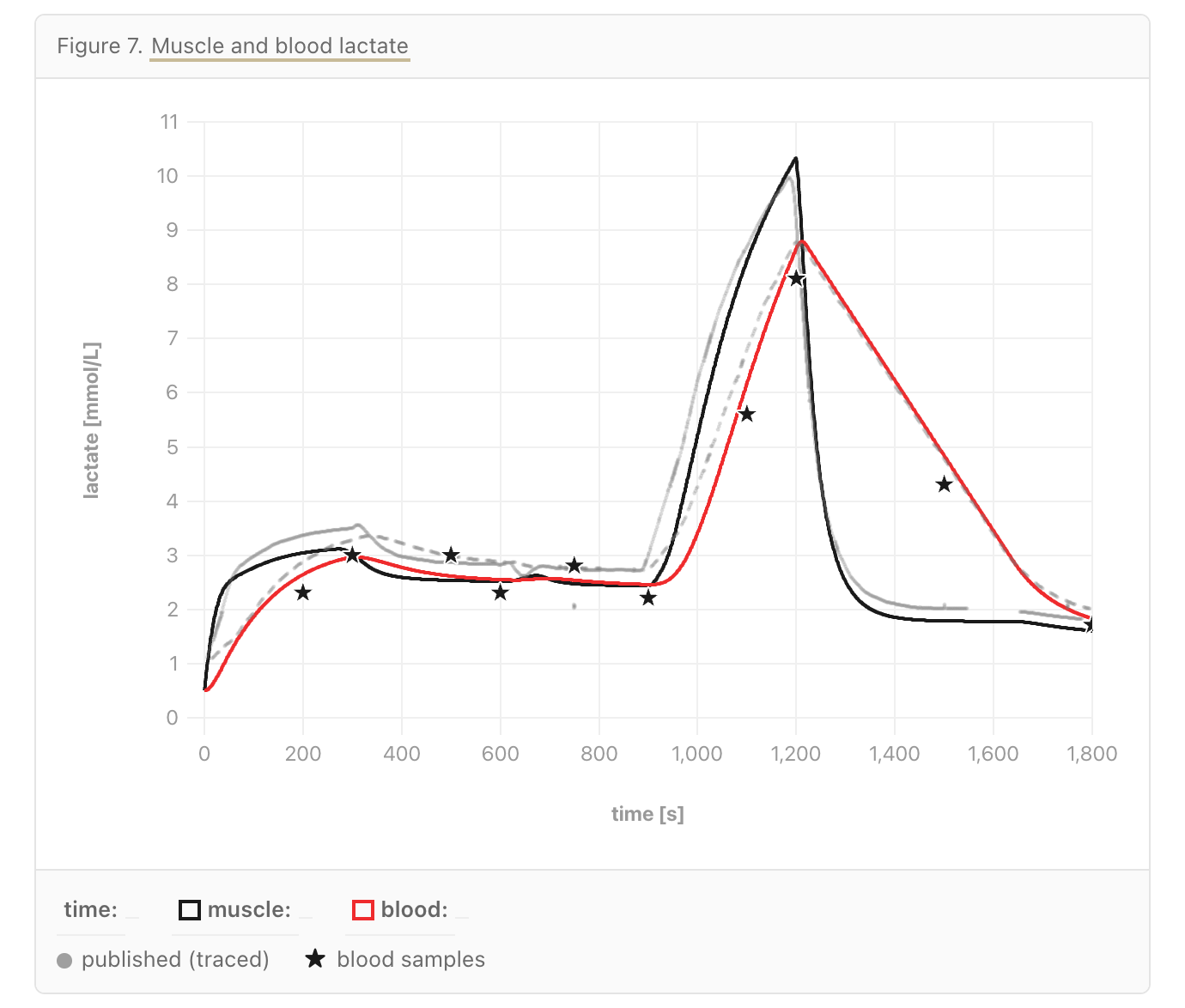
#threshold Moxnes, J. F., & Sandbakk, Ø. (2012). The kinetics of lactate production and removal during whole-body exercise. Theoretical Biology and Medical Modelling, 9, 7.
#cycling
#intensity duration modelling Zignoli, A. (2026). Tracking Performance Limits Using Multi-Timescale Maximal Mean Power Ratios. European Journal of Sport Science.
#cycling
#heartrate modelling de Leeuw, A. W., Voet, J. G., van Erp, T., Lamberts, R. P., de Koning, J. J., & Knobbe, A. (2025). Coupling heart rate and power data in professional road cycling: Shorter heart rate response indicate better 10-min time trial power output. Journal of Sports Sciences, 43(10), 978-985.
The aim of our study is to investigate whether coupling power output (PO) and heart rate (HR) data of semi-professional road cyclists collected in the field is helpful for optimising the training process.
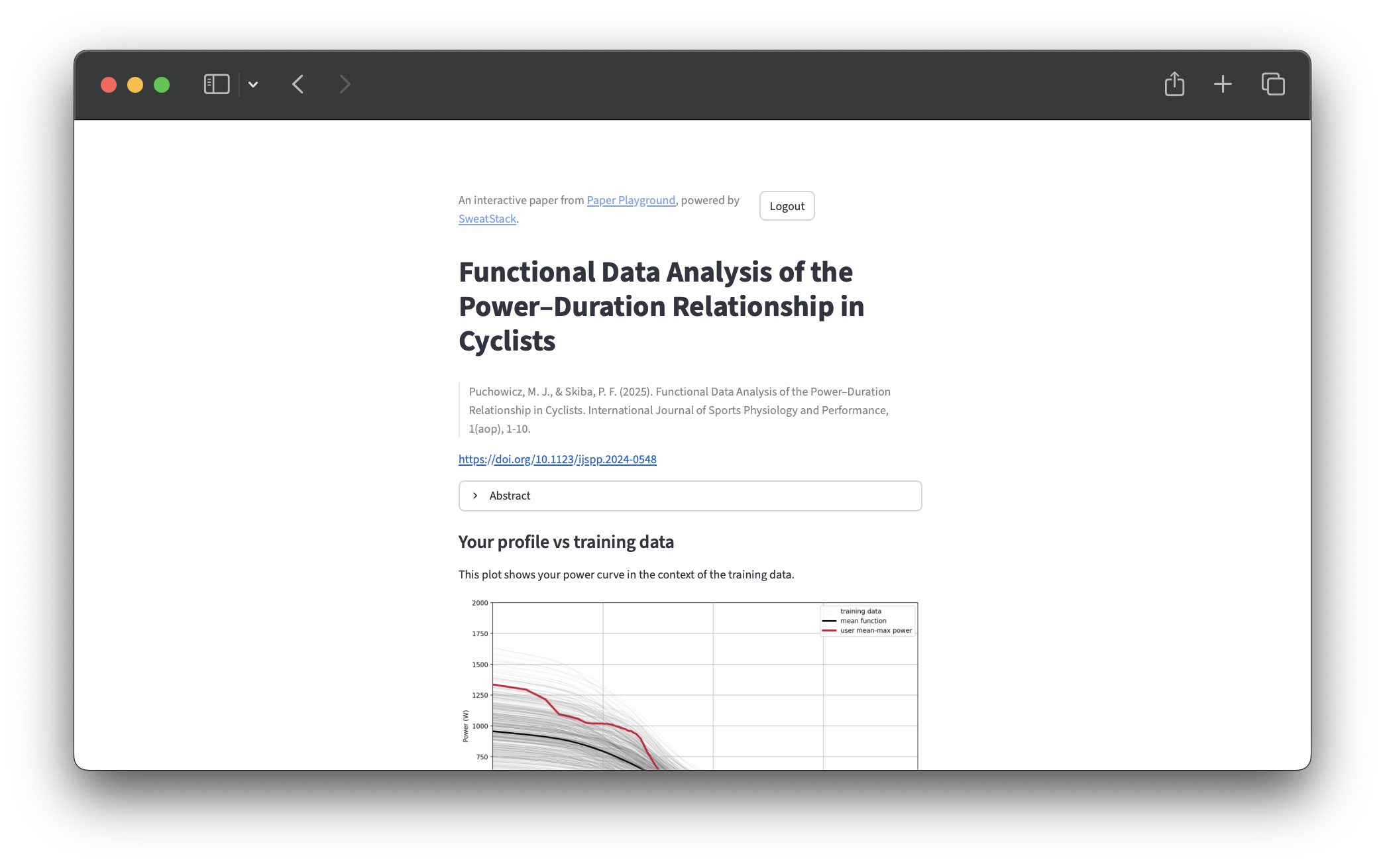
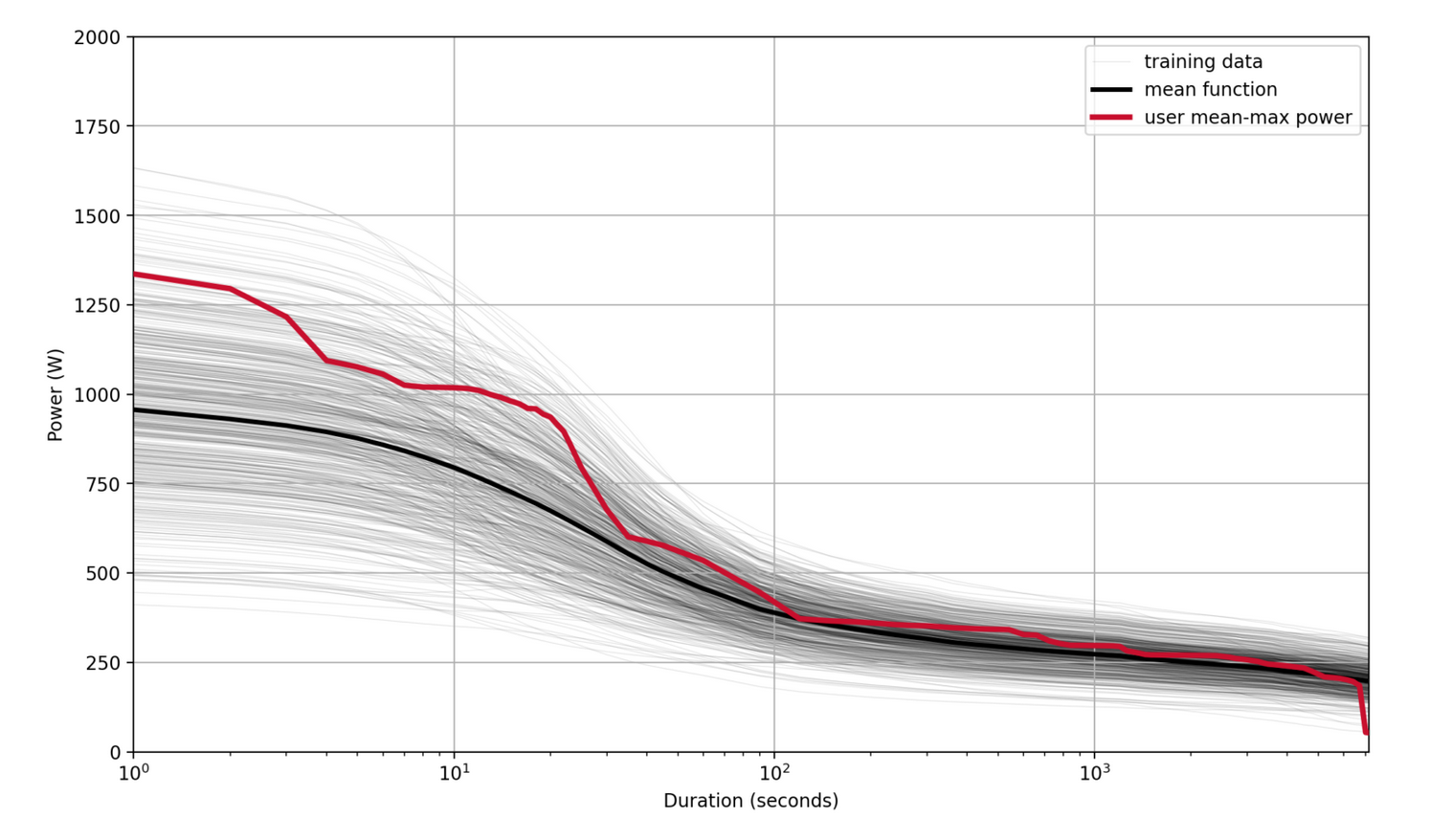
Puchowicz, M. J., & Skiba, P. F. (2025). Functional Data Analysis of the Power–Duration Relationship in Cyclists. International Journal of Sports Physiology and Performance, 1(aop), 1-10.
To extract, prioritize, and model the highly conserved variations in mean-maximal power (MMP) data in cyclists utilizing functional principal component (FPC) analysis.
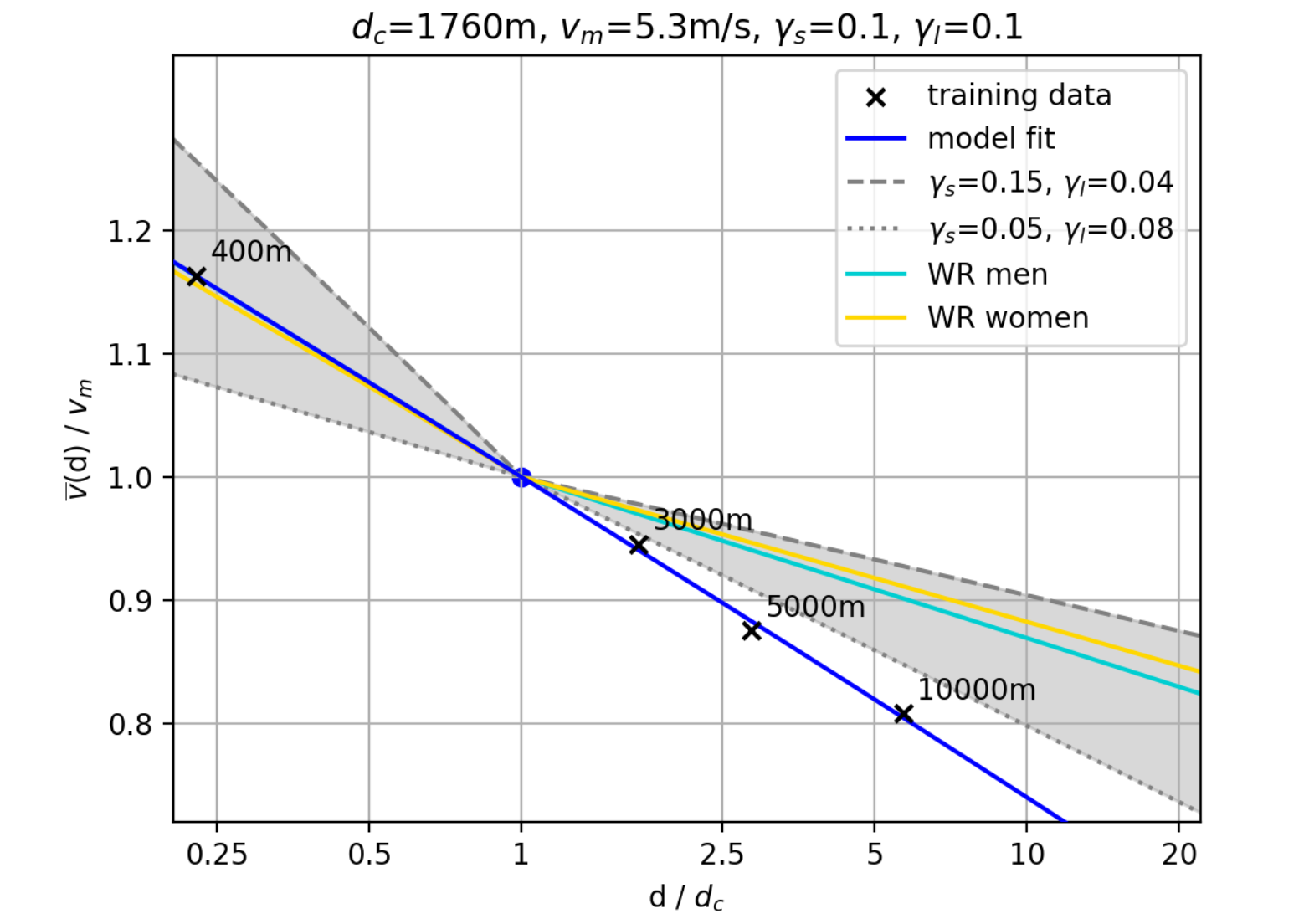
Mulligan, M., Adam, G., & Emig, T. (2018). A minimal power model for human running performance. PloS one, 13(11), e0206645.
Models for human running performances of various complexities and underlying principles have been proposed, often combining data from world record performances and bio-energetic facts of human physiology. The purpose of this work is to develop a novel, minimal and universal model for human running performance that employs a relative metabolic power scale.
 Paper Playground